
Documented Firearms
We thank our previous clients who graciously allowed us to display their prized possessions on our website.
We furnished the documentation, and they provided pictures so we could better show one of the missions of Archival Research Group
We are deeply grateful to all those who contributed. Your trust and support mean the world to us. Thank you very much!
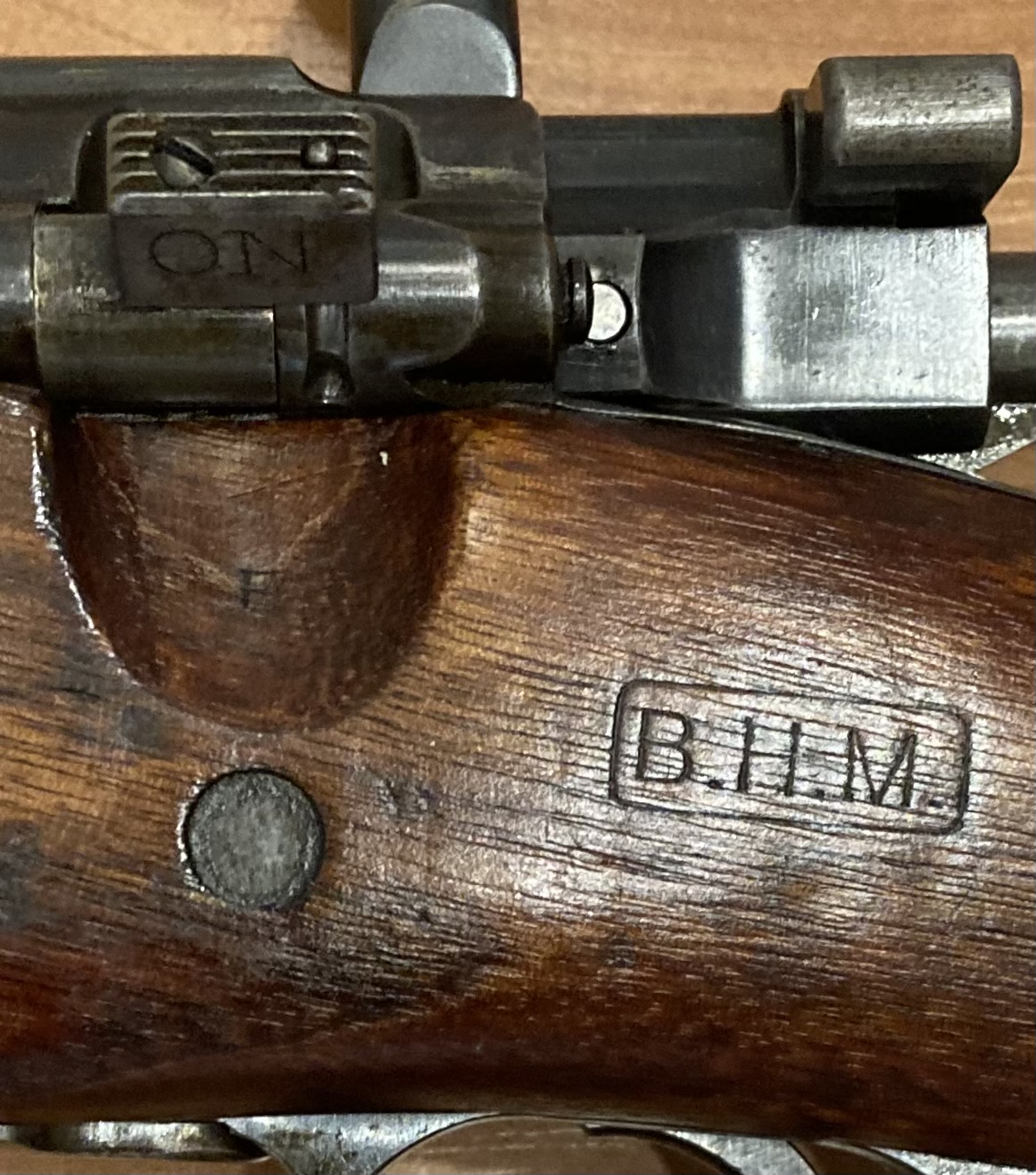
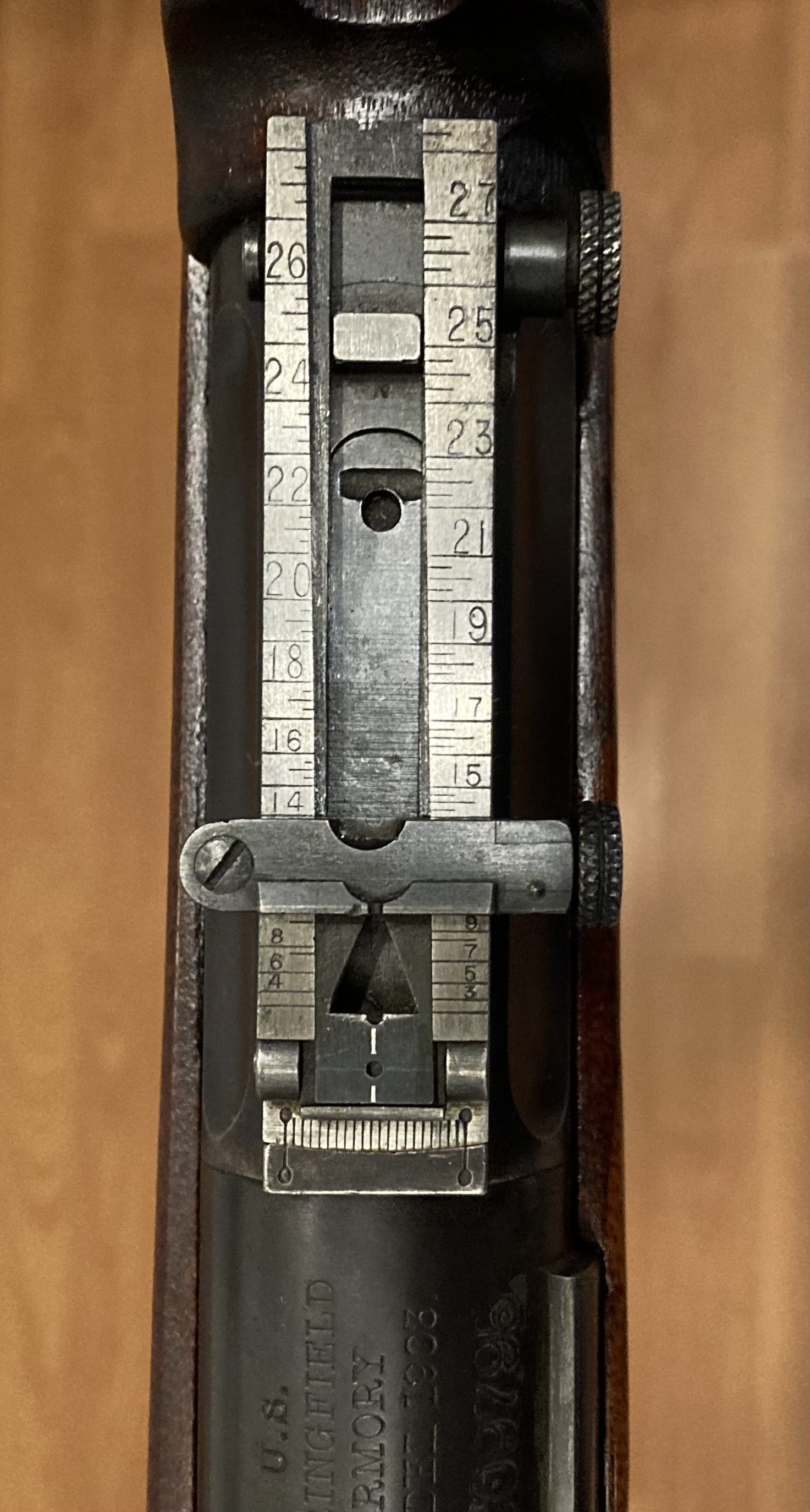
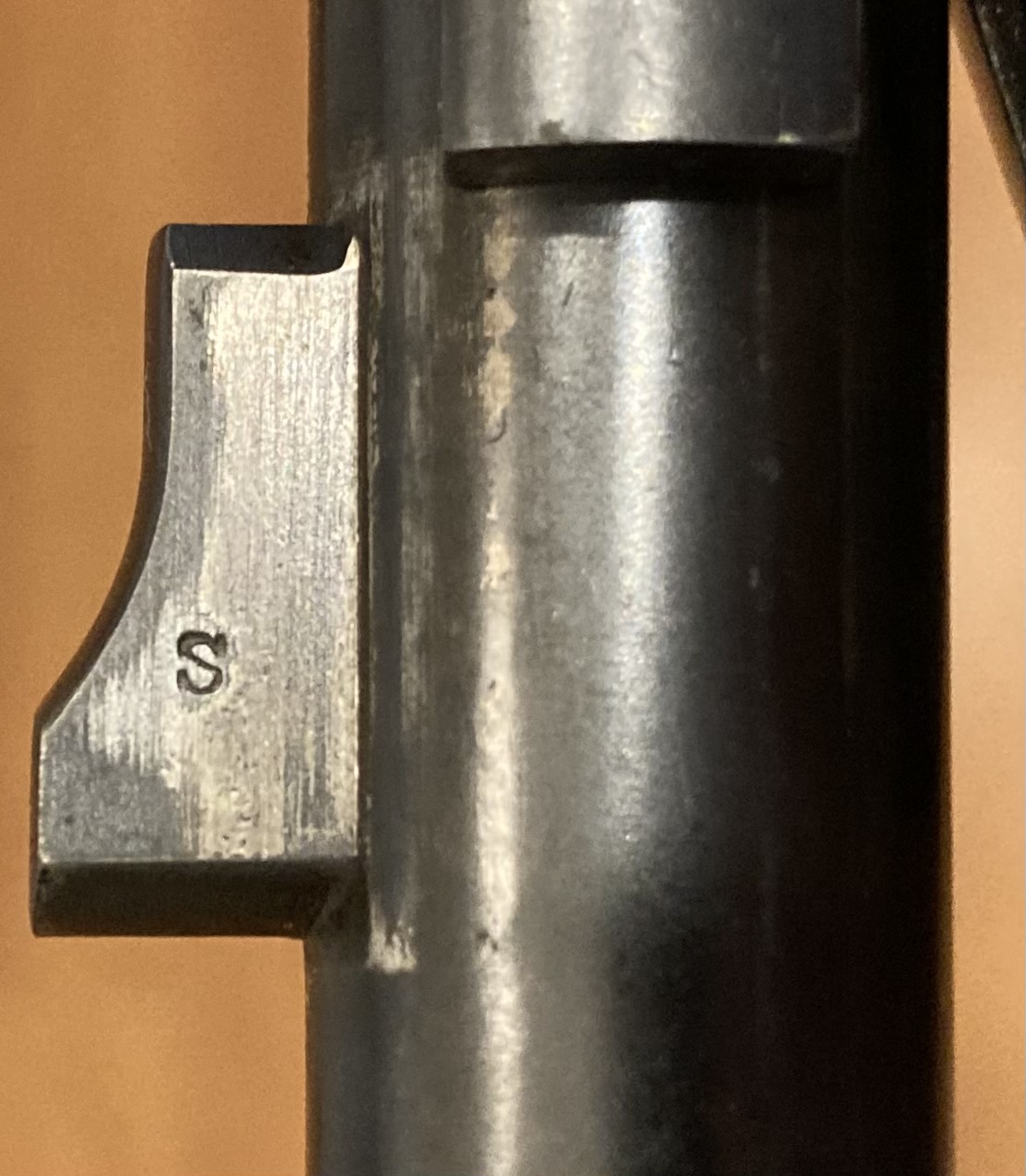
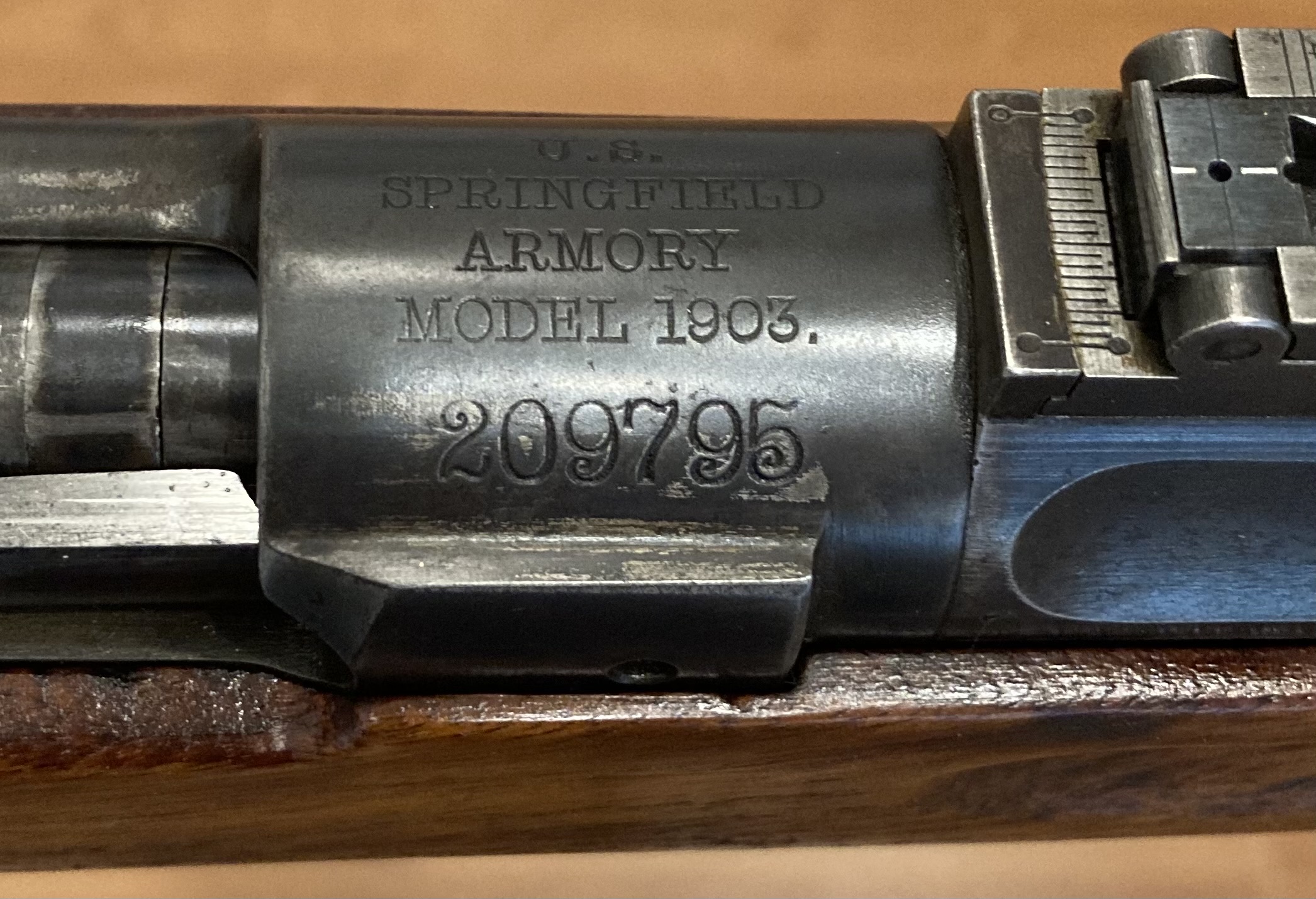
M1903 Serial Number 209,795, documented to the State Department’s consulate in Jerusalem and Beirut.





-

- 305

-

- 305

-

- 305

-

- 305

-

- 305

M1911 Serial Number 110,653 documented to the W. W. Millard, 31st Infantry, American Expeditionary Forces, Siberia in 1919.


-

- 241


M1911 Serial Number 2,007,992 National Match sold through the Director of Civilian Marksmanship


M1911 Serial Number 77,420 documented to Oak Ridge, Tennessee “Manhattan District”
-

- 241

-

- 241


M1911 Serial Number 52,520 Documented to the U.S. Army recruiting station in Hutchinson, Kansas and reported to be recovered from a police raid on migrant track laborers.


-

- 241

-

- 241

-

- 241

-

- 241

-

- 241

-

- 241

-

- 241

-

- 241

-

- 241

-

- 241


M1903 Serial Number 164,741 Documented to the former U.S. Consulate in Chungking, China.
Rifle 164741 was found in a report filed by Assistant Secretary Nelson T. Johnson of the State Department addressed to the Secretary of War Dwight F. Davis. Johnson informed Davis of the ordnance material formerly in the custody of the American Consulates of Changsha and Chungking, which were closed. This is likely a result of the Nanking Incident of 1927, where troops under the National Revolutionary Army (NRA) and local citizens began looting and attacking foreign interest buildings in the area, primarily British and American. The State Department likely closed these consulates for safety reasons and did not want army ordnance property to fall into the custody of the local population.
Rifle 164,741, was taken aboard the U.S.S. Monocacy, a navy shallow draft gunboat, to the port at Hankow and transferred to another navy gunboat, the U.S.S. Elcano, for further transport to Shanghai. This report serves as a transfer of custody for the State Department, informing the War Department of where the ordnance property was shipped after being removed from the closed consulates.
(Michael Dolfi Collection)


-

- 241

-

- 241

-

- 241

-

- 241

-

- 241

-

- 241

-

- 241

-

- 241

-

- 241

-

- 241

-

- 241

-

- 241

M1903 Serial Number 344,059 Documented to C.G. 243


-

- 241

-

- 241

-

- 241


M1903 Special Target Serial Number 1,269,271
Model: Rifle, U.S., cal. .30 M1903 Star Gauged Special Target Rifle
Sold to: Kowa Rifle Club, Kowa Kansas
(This is likely a spelling error done by the armory employee. It likely was sold to the Kiowa Rifle Club in Kiowa, KS)
Date: June 19, 1926
David Tottleben Collection


M1903 National Match (used) Serial Number 1,497,403
Sold to: Mr. W. W. Britt
Address: 6 Alice, Wheeling West Virginia
Date: September 15, 1937
Gabriel Tomelloso collection


M1903 NRA Sporting Rifle Serial Number 1,356,038
Sold to: G. H. Keirsted, Jr.
Address: 40 Hermam St. Uniontown, PA
Date: September 26, 1931
Gabriel Tomelloso collection.


M1873 Colt Single Action Army Serial Number 137,808 documented to the Spanish American War
This Colt Single Action Army, serial number 137,808, was issued to John M. Turrell while serving in the 3rd Company of the U.S. Volunteer Signal Corps. Archival records indicate John Turrell was a telegraph operator as his occupation. The Signal Corps required that wo-thirds of the officers and enlisted were skilled telegraphers and electricians.
John Milton Turrell was born on February 12, 1861, to Willard Turrell and Elizabeth Turrell in Medora, Indiana. He served two enlistments with the Signal Corps. His first enlistment was with the 14th Company U.S. Volunteer Signal Corps from June 23, 1898, to April 28, 1899. He reenlisted the same day, but this time, he enlisted with the 3rd Company U.S. Volunteer Signal Corps, and his enlistment expired on April 17, 1901. The Signal Corps 14th Company was recruited from Indianapolis, Indiana, and served with the 3rd Army Corps out of Camp Thomas, Georgia. The Signal Corps 3rd Company was recruited from Brooklyn, New York, and served with the 7th Army Corps from Jacksonville, Florida. John Turrell was serving as 1st Sergeant of the 3rd Company. He is described as 37 1/3 years of age, 5′ 8 ½”, fair complexion, blue eyes, and brown hair. He died on October 3, 1943, and is interned at Arlington Cemetery.
Thomas Knox collection


M1903 Springfield Serial Number 289751 Marine Corps issued
The old saying goes, “Every Marine is a rifleman,” and this rifle is a rifleman’s rifle. It was issued to Marine Murvin W. Oliver on September 5, 1930. He exchanged it for another rifle, which he turned into the Depot Quartermaster at San Diego, California.
This rifle exhibits numerous USMC rebuild characteristics, such as a punch mark in front of the receiver (which denotes passing the Rockwell Hardness Test), stippled butt-plate, USMC contract R.F. Sedgely replacement barrel, added gas escape hole (colloquially referred to as “Hatcher Hole” by collectors), and a tall sight hood, which the USMC manufactured to accommodate the taller USMC No. 10 sights.
It’s important to note that the Navy and Marine Corps records, including full personnel files on the individual Marine or Navy sailor, were untouched by the 1973 fire at the National Archives in St. Louis, Missouri. This gives the rifle a deeply personal story, connecting us to the individual who once carried it.
Major Scott Holmes, USMC collection


M1898 Krag–Jørgensen Serial Number 146,895
This Krag was issued to Private Charles T. Cooley, Company K of the 1st Maryland Volunteer Infantry.
It comprised 43 officers and 1,044 enlisted personnel, including Private Cooley. The 1st Maryland spent most of its time training at Fort Monroe in Hampton, Virginia. It had been planned that they would be sent to Puerto Rico, but the war ended before they could see combat.
Charles T. Cooley’s dedication to service continued. He transitioned to a new role, becoming the first Police Chief of Montgomery County, Maryland, a position he held from its formation on July 4, 1922. Below is a picture of Charles T. Cooley standing in front of his other officers.
George Owen collection


M1892 Krag–Jørgensen Serial Number 4085 to the 20th Kansas
This rifle is a mystery, and research is ongoing. It was apparently issued to “Hogan” of Company L of the 20th Kansas, but no “Hogan” can be found in the 20th Kansas. It may have been a transcription error; it was meant to enter “Hagen” for “Wyatt Hagen” of the same unit. The 20th Kansas was legendary for the combat experience it gained during the Philippine Insurrection. At the same time, it doesn’t specifically say whether this rifle saw combat. Given that it went to a battle-hardened unit, we are actively seeking to solve this mystery because we will be able to dive deeper into the service history of the soldier in question.
Stay tuned; as the situation develops, we will update this rifle’s information.
Major Scott Holmes, USMC collection


M1903 National Match Serial Number 1,266,598
Sold to Commander J. S. McCain, Executive Officer, U.S. Fleet, U.S.S. New Mexico, San Pedro, California on January 21, 1927.
This rifle was one of two purchased by the late Admiral on January 21, 1927. He was a prominent career Navy officer and the grandfather of the late U.S. Senator John McCain (AZ).
This rifle is absolutely stunning!
Kevin Blackhurst collection


Warner and Swasey Model of 1908 Telescopic Musket Sight Serial Number 729
This Warner and Swasey Model 1908 Musket Sight, a documented piece, stands as a truly rare find in the realm of military history and artifacts.
Representing a significant milestone, this is only the second time we have documented an artifact by serial number that is not a firearm. Notably, its documentation is not confined to a single location, but is spread across two esteemed National Archive sites: Archives I in Washington, D.C., and Archives II in College Park.
Unveiling a wealth of historical information, this artifact is accompanied by one of the most meticulously detailed reports we have encountered, bolstered by a trove of primary source documentation.
Unfortunately, the scope is not attached to the original rifle. The scope is mounted to rifle serial number 418,203. The rifle and scope came out of the George Moller collection. The present location of M1903, serial number 353,326, has yet to be discovered.
The first report indicates that 2nd Lt. Oscar Westover was in charge of conducting the test of the M1908 telescopic musket sights at Camp Bumpus. In his report, it is noted that 1st Sergeant Perry, Company A of the 14th Infantry, was the individual who tested the rifle 353,326 and scope number 729. Several infantry and cavalry units conducted field tests of the M1908 Warner Swasey telescopic sights. One of the more exciting comments mentioned in the report is that Lt. Westover notes that the test needed to be revised to establish the advantages and disadvantages of the scope, mainly because of how untrained the men in his unit were. He notes that men in his command were just out of rifle training, and the range firing was entirely new to them. He further states that he could conduct a more suitable test, such as three months if granted more time.
The second report from the Manila Ordnance Depot is dated January 19, 1917. In this report, Lt. Col. Hof was inspecting and shipping several rifles fitted with telescopic sights back to Springfield Armory because they were in unserviceable condition. He notes that several were covered with moisture, dirt, or paint plates and wrapped in paper. He informs the Chief of Ordnance that they will be shipped back for repair. Lt. Col. Hof was the Commanding Officer of the Manila Ordnance Depot at this time. He would later serve as the Commanding Officer of Frankford Arsenal during World War I. He later became the Chief of Ordnance from 1930-1934 and finally retired as a Major General.
The owner, displaying a remarkable dedication, went above and beyond to unearth every detail about 1st Sergeant Perry avaialable, the man who tested the rifle and scope in August 1909 at Camp Bumpus in the Philippines. He graciously provided his extensive research for us to share with you.


First Report from Camp Bumpus dated 1909
-

- 241

-

- 241

-

- 241

-

- 241

-

- 241

-

- 241

-

- 241

-

- 241

-

- 241

-

- 241

-

- 241

-

- 241

-

- 241

-

- 241

-

- 241

-

- 241

-

- 241

-

- 241

-

- 241

-

- 241

-

- 241

-

- 241

The Second Report from Manila Ordnance Depot dated 1917
-

- 241

-

- 241

-

- 241

-

- 241

-

- 241

-

- 241

-

- 241

-

- 241

-

- 241

-

- 241

-

- 241

-

- 241

-

- 241

-

- 241

-

- 241

-

- 241

The owner’s own research contributions


Martin Callahan collection.